
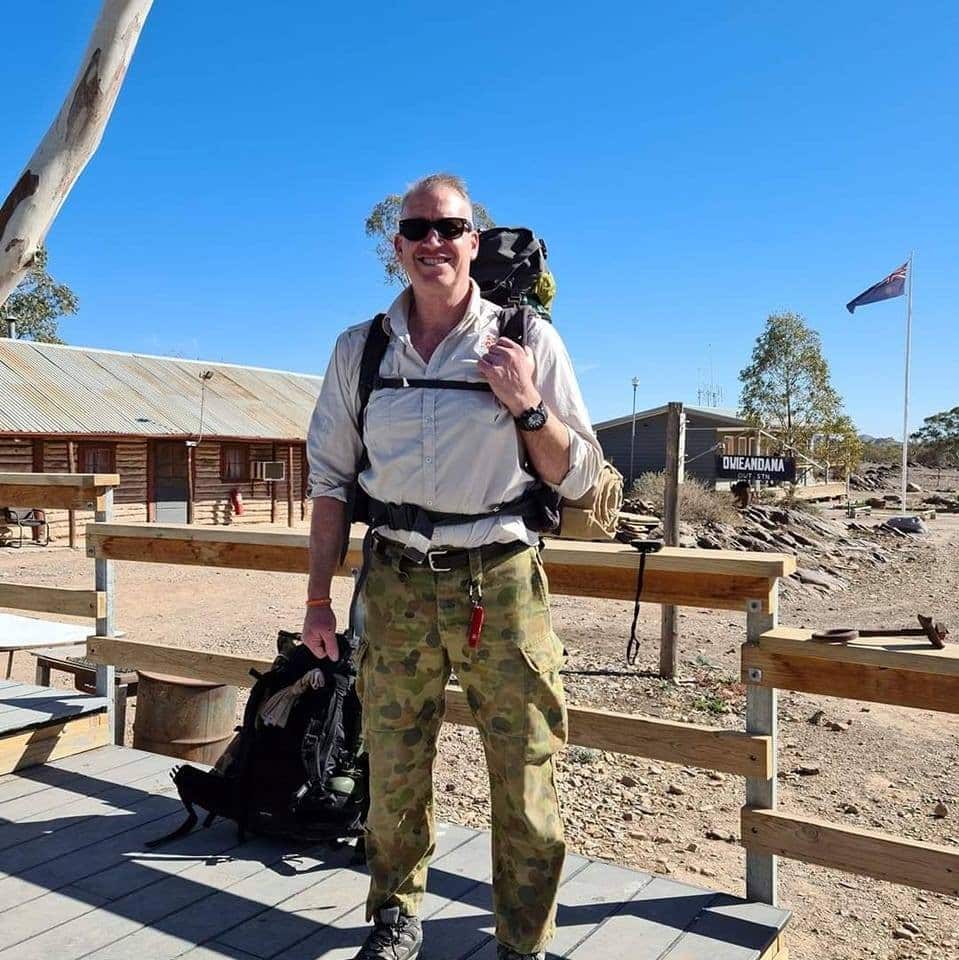
Recently, I returned from the Flinders Ranges with a team of young people that were part of the Operation Flinders program.
My role is part of the adult leadership group out in the field. I feel privileged to play my small part within this fantastic organisation.
After our eight days out on exercise, all the field and base camp volunteers congregate to share stories from our trip.
One of the other field volunteers said something that I thought was quite profound, that being, one of our primary roles to allow the young people to be seen and heard. This statement really resonated with me.
Many of the participants that go on an Operation Flinders exercise don’t have a positive home life, and normally don’t have good adult role models. There are of course exceptions to this.
On exercise, we are essentially working as small team over the eight days, and it does take a while for the young people to fully trust the field volunteers, that they have only met for the first time the day they arrive.
As field volunteers, we can talk about what we are going to do as much as we like, but it’s our consistent actions over multiple days that demonstrate that we are genuine in our care and respect for the young people.
Another important aspect of the interaction with the participants is being non-judgmental. It’s important not to put our lens onto another person’s reaction to a situation. We have no idea what they have had to deal with in their short lives to that point, and it’s not helpful to leap to judgement.
Being a good listener is another trait of the Operation Flinders field volunteer cohort.
If participants know they have a safe space to truly express how they are feeling, the outcomes are much better.
Allowing people to be truly seen and heard is relevant in any context, not just up in the Flinders Ranges. If people use this as their starting point in any interaction, better results are bound to be achieved.
In a farming context there are numerous one-on-one interactions between family members, employees, and the multitude of external suppliers.
If people take a big breath and think about what they are going to say before they start speaking, a lot of friction would be alleviated.
There is power in fully understanding where someone else is coming from. It doesn’t mean we need to agree, and ultimately, someone needs to make a decision.
But getting a full range of ideas will generally get a better result than just one person’s view of the world.
I have seen the change the young people make during the duration of the Operation Flinders exercise.
This comes from self-confidence, and realising they are more capable than they think.
A big part of the growth comes from understanding that the adults around them are listening to them.
This is relevant in all situations. It’s a choice to really listen and understand where someone else is coming from. We all have the power to do this.





Leave a Reply